
Mingtuo Electric Kicks Off March “New Trade Festival” with Exclusive Promotions on Core Product Lines
Amid the global cross-border e-commerce “New Trade Festival” in full swing this March, Mingtuo Electric has officially launched its “March
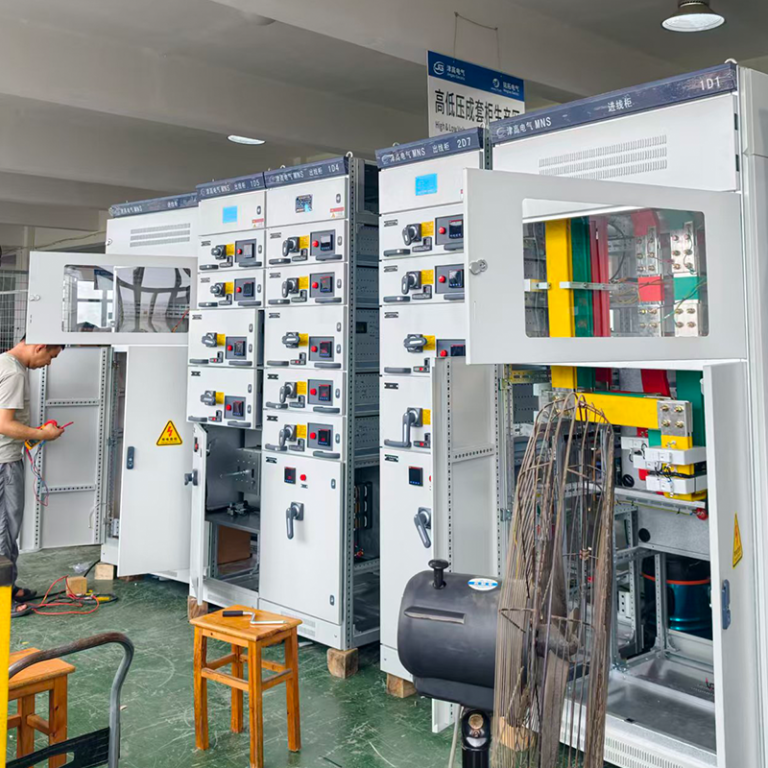
| Item | Specification |
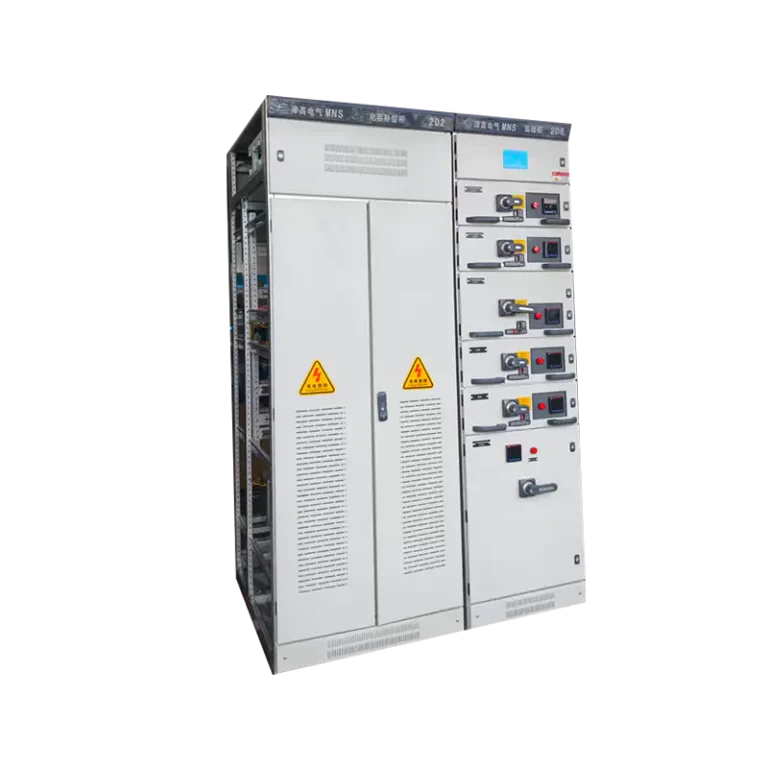
| Model | MNS Withdrawable Low-Voltage Switchgear |
| Rated Operating Voltage | AC 380/400V (Three-phase Four-wire) |
| Rated Insulation Voltage | 690V |
| Rated Frequency | 50Hz |
| Rated Bus Current | 630A ~ 4000A |
| Current Range of Drawer Units | 16A ~ 630A |
| Short-time Withstand Current | Optional 30kA/1s, 50kA/1s |
| Protection Class | IP30 (Indoor Application) |
| Installation Type | Indoor Floor-standing Installation |
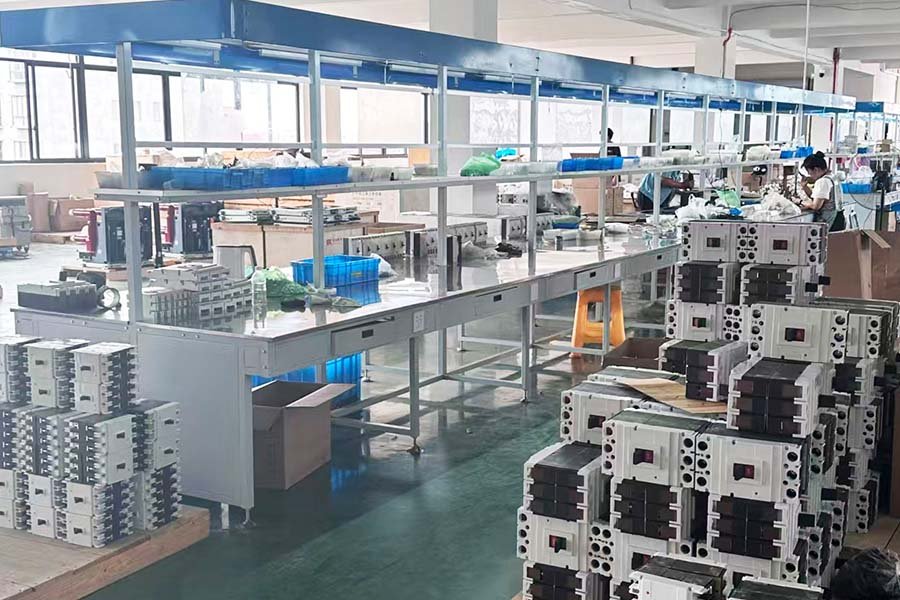
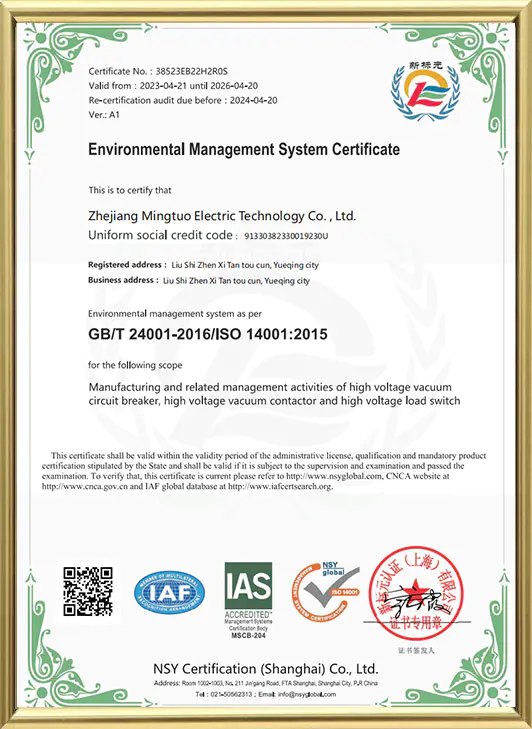
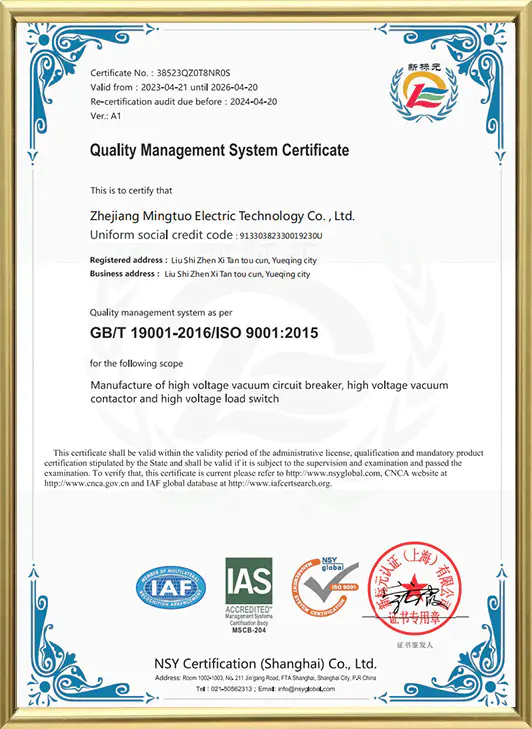
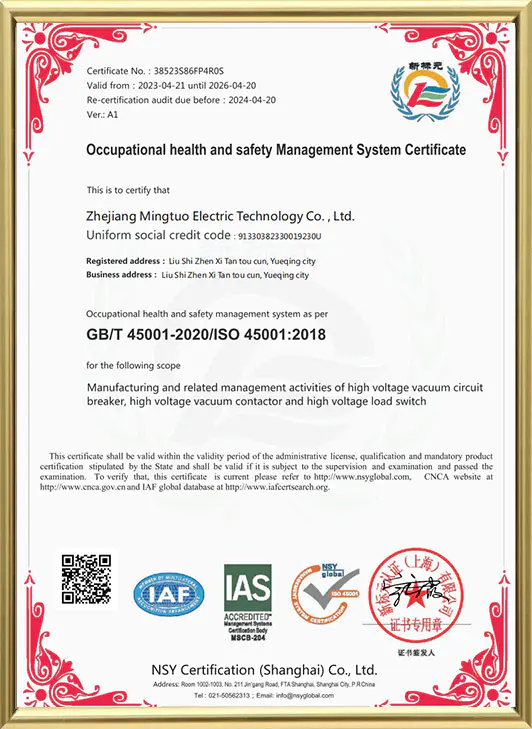
Zhejiang Mingtuo Electrical Technology Co., Ltd. is a technology-driven enterprise specializing in the research, development, and manufacturing of low-voltage and medium-voltage circuit breakers. Leveraging Liushi’s comprehensive electrical industry chain and local advantages, we provide reliable and safe electrical protection products along with customized solutions for global industrial, commercial, and residential power distribution systems.
Industrial Circuit Breaker Suppliers and Residential Circuit Breakers Company in China. Our products are exported to over 30 countries worldwide, including Europe, the Middle East, Southeast Asia, and Africa. Our diverse clientele encompasses power distribution cabinet manufacturers, engineering contractors/EPC firms, electrical distributors and agents, system integrators, and OEM customers. We provide our partners with a comprehensive one-stop service, spanning from technical support, solution alignment, and prototype development to mass production delivery. Commercial Circuit Breakers Company.
We are committed to becoming a trusted electrical protection partner for global customers through professional engineering capabilities, consistent manufacturing quality, and flexible customization services.
Amid the global cross-border e-commerce “New Trade Festival” in full swing this March, Mingtuo Electric has officially launched its “March
This week, Mingtuo Electric officially announced the launch of two new products to further improve its product solutions in the field of
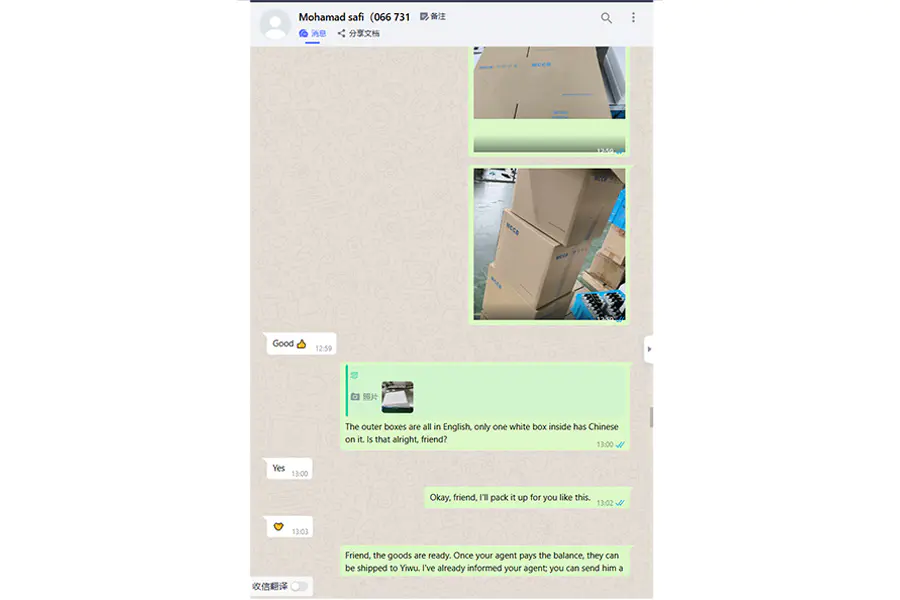
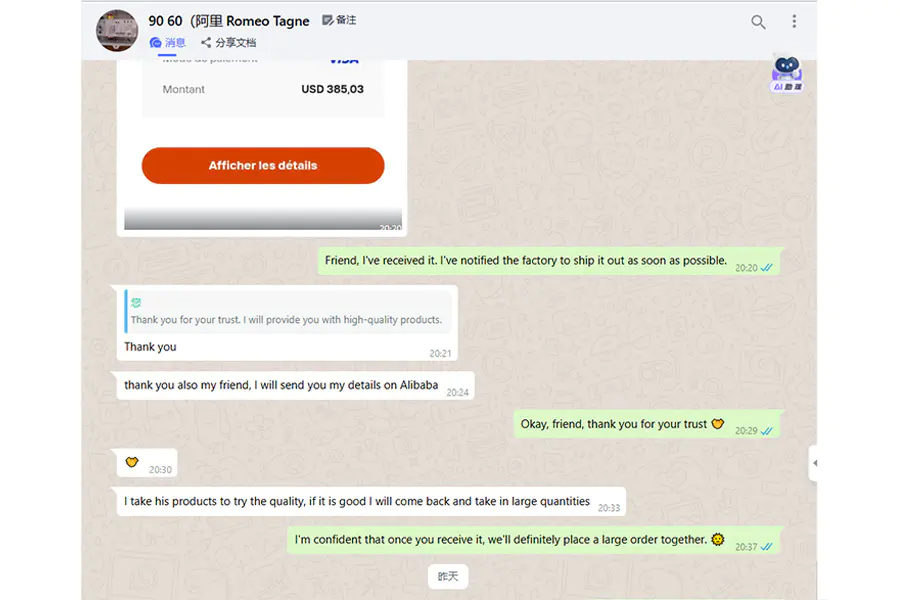
Recently, Zhejiang Mingtuo Electrical Technology Co., Ltd. successfully reached an important cooperation agreement with a Nigerian client, marking a further expansion of
Industrial circuit breakers operate in environments where electrical loads fluctuate constantly and fault conditions can develop within milliseconds. Manufacturing lines, heavy machinery systems, and automated production facilities require protective devices that tolerate high fault currents while maintaining stable interruption capability. In these scenarios, the internal arc-extinguishing structure, contact materials, and thermal-magnetic calibration accuracy determine whether a breaker can respond correctly during short circuits or overload conditions.
Industrial systems often involve motors, pumps, compressors, and variable frequency drives that produce inrush currents several times higher than normal operating current. Selecting industrial circuit breakers therefore involves evaluating not only rated current but also breaking capacity, mechanical durability, and coordination with upstream protection equipment. Manufacturers that specialize in circuit breaker engineering focus heavily on contact alloy composition, arc chute design, and magnetic tripping precision to ensure reliable interruption under repeated fault events.
Manufacturers such as Zhejiang Mingtuo Electrical Technology Co., Ltd. develop industrial circuit breakers by combining engineering research with real-world industrial application requirements. Through access to Liushi’s established electrical component supply chain, companies in this region can integrate high-quality materials and precision manufacturing processes to produce protective devices suitable for demanding industrial power distribution systems.
Residential circuit breakers operate in a completely different electrical environment compared with industrial installations. Household distribution panels supply lighting circuits, kitchen appliances, air conditioning units, and electronic devices, each presenting different load characteristics. Rather than handling extremely high fault currents, residential breakers must prioritize consistent sensitivity to moderate overloads and electrical faults that could lead to wiring damage or fire hazards.
Modern homes contain a growing number of high-power electrical appliances such as induction cooktops, electric water heaters, and electric vehicle charging equipment. This change in load profile has increased the importance of selecting circuit breakers with precise tripping curves and stable thermal protection characteristics. Properly calibrated residential circuit breakers protect branch circuits without nuisance tripping while still disconnecting power when abnormal current persists.

With the increasing electrification of residential infrastructure, circuit breaker manufacturers are placing greater emphasis on long-term thermal stability, consistent tripping performance, and compatibility with compact distribution boards used in modern housing construction.
Commercial buildings such as office complexes, shopping centers, hospitals, and hotels require electrical protection systems that balance operational reliability with energy management efficiency. Commercial circuit breakers must support large distribution panels that supply multiple floors, lighting systems, elevators, HVAC equipment, and information technology infrastructure.
One of the key challenges in commercial power distribution is maintaining selectivity between upstream and downstream protective devices. When a fault occurs in a single branch circuit, only the nearest breaker should trip while upstream devices remain closed. This selective coordination reduces power interruptions across the building and prevents unnecessary downtime for tenants and facility operators.
Companies engaged in circuit breaker research and manufacturing contribute to these requirements by refining production processes, improving contact durability, and maintaining consistent calibration during mass production. Zhejiang Mingtuo Electrical Technology Co., Ltd., for example, focuses on the development and manufacturing of low-voltage and medium-voltage circuit breakers that support industrial, commercial, and residential power distribution networks. By combining engineering design capabilities with Liushi’s mature electrical manufacturing ecosystem, the company delivers electrical protection products designed for stable performance across a wide range of application environments.
Across industrial plants, commercial facilities, and residential buildings, circuit breakers function as critical safety components within the electrical infrastructure. Continuous improvement in materials engineering, arc interruption technology, and precision manufacturing allows modern circuit breakers to respond faster, operate more reliably, and maintain consistent protection performance throughout long service cycles.
Our goal is to help people in the best way possible. this is a basic principle in every case and cause for success. contact us today for a free consultation.
Sign up to our newsletter